Minecraft Java 26.3 vs 26.2: changes and MapMC status
Compare Java 26.3 Wilderness Bound with 26.2 Chaos Cubed, then check the separate MapMC Seed Map, Finder, generated-world, and resource-pack evidence before upgrading.
Updated 2026-09-27 · MapMC Editorial
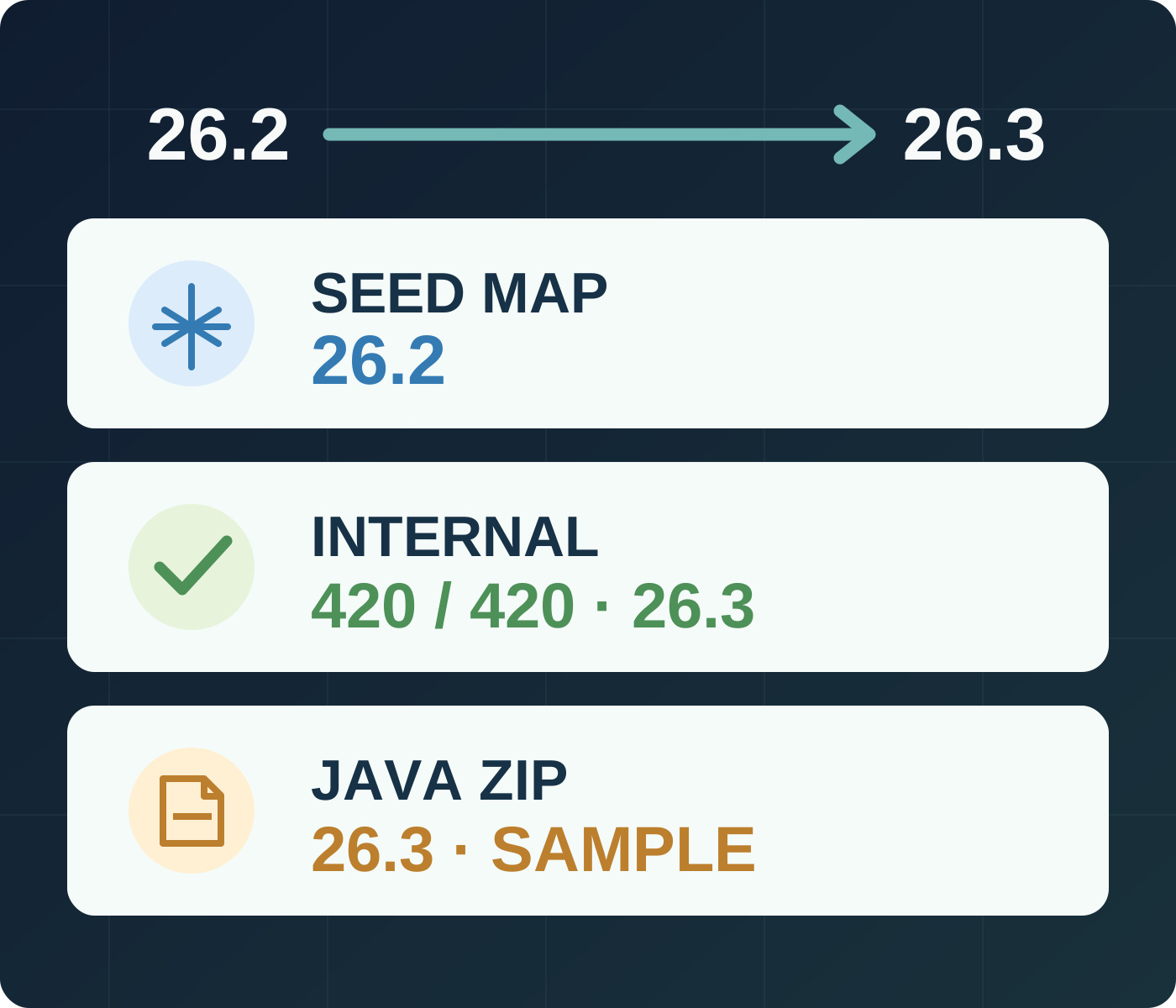
Java 26.3 is a released game update, but MapMC's public Seed Map and Finders still offer Java 26.2. The 26.3 release, Wilderness Bound, adds Dappled Forests, Abandoned Camps and changes to Explorer Maps. Internal MapMC checks passed 420/420 version-specific Seed/Finder reference cases, and selected generated Java worlds opened, saved and reopened in the 26.3 client. Those checks are useful evidence, not a promise that every public tool, ZIP, pack or server is certified for 26.3.
What changed from 26.2 to 26.3?
| Area | Java 26.2: Chaos Cubed | Java 26.3: Wilderness Bound |
|---|---|---|
| Exploration | Sulfur Caves and Sulfur Cubes were the headline additions | Dappled Forests and Abandoned Camps are new places to discover |
| Maps | Existing Explorer Map behavior | Explorer Maps become distinct items; older maps convert when the world loads, and zooming out is no longer supported |
| Other changes | Friends List and experimental Vulkan graphics | World-generation performance work and other fixes; see the official notes for the full list |
| Technical pack versions | Data Pack 107.1; Resource Pack 88.0 | Data Pack 121.0; Resource Pack 97.1 |
This is a comparison of Java Edition stable releases, not Bedrock, Preview or Snapshot. The Java 26.2 guide explains Chaos Cubed in detail. Mojang's Java 26.3 release notes are the source for the complete Wilderness Bound changes; a short comparison should not replace that changelog.
Which MapMC evidence applies?
MapMC has separate version boundaries. The Seed Map and Finders run calculations in the browser; the Generator runs a Worker and delivers a Java world ZIP. A result in one system cannot certify the other. As checked on September 27, 2026:
| MapMC surface | Checked result | What you can safely claim |
|---|---|---|
| Public Seed Map and Finders | Version selector remains Java 26.2 | Use their listed 26.2 capabilities; do not select or label a result as 26.3 |
| Internal 26.3 Seed/Finder candidate | 420/420 native reference cases passed after correcting an oracle coordinate mismatch | Promising engine evidence; browser runtime, sharing, mobile and all-locales acceptance remain separate release gates |
| Generated Java world ZIP | Selected existing worlds opened in a real Java 26.3 client, including one original 1.21.4 ZIP; sampled scenes and map items were checked, then saved and reopened | Some real files passed a client check; not every world shape, area, pack or server configuration was exercised |
| Resource packs | A pack with older 88.0-only metadata was flagged by the client; a candidate range including 97.1 was tried | Pack metadata must be checked separately; do not infer that every pack is compatible |
The internal checks are documented in MapMC's dated QA records. They do not turn an unreleased Java 26.3 Seed runtime into a public feature. Abandoned Camps are also not a published MapMC Finder target merely because Minecraft added them.
Should you update a MapMC world now?
If you want to explore the new vanilla features, test a copy of your existing Java world in the stable 26.3 client. Keep the downloaded MapMC ZIP or original save untouched. A newer client may modify world data when it opens and saves it; a successful first launch alone is not enough evidence.
- Record the current Java version, world name, and any required resource packs. Keep an independent copy of the source ZIP or save.
- Extract or copy to a clearly named test world. Check that its folder directly contains
level.datbefore placing it in the Javasavesdirectory. - Open the copy in Java 26.3. Inspect spawn, terrain, roads and buildings; inspect supplied map items if present. New 26.3 terrain features are not promised inside an already generated MapMC area.
- Save, exit the client, reopen the same copy, and repeat the checks. Confirm any pack warning separately from world-file behavior.
- Keep the original and the tested copy. If the world is missing, content changes unexpectedly, or save/reopen fails, stop and return to the original rather than repeatedly modifying it.
For the detailed backup and recovery path, follow opening a world in a newer Minecraft version safely. A client opening one sample does not prove all 26.3 combinations, and a Java world ZIP is not a Bedrock .mcworld conversion.
What about Explorer Maps and new locations?
Java 26.3 changes Explorer Maps as game items. Existing Explorer Maps convert when a world loads; zooming them out no longer works. If a MapMC world includes a map item, inspect that item in the test copy and again after save/reopen. Do not infer from the release notes that MapMC generates an Explorer Map for the new places.
Dappled Forests and Abandoned Camps are vanilla exploration content. MapMC's public Seed/Finder runtime remains 26.2, and there is no public Abandoned Camp Finder or 26.3 Seed Map yet. The Generator creates a world from a selected real-world area; it does not promise that every new vanilla biome or structure will appear in an already generated location. Use the Seed Map only for the versions and targets its own interface lists.
Quick decision
- Reading about the game update? Use the official 26.3 notes for complete game and technical changes; this page compares the user-facing differences and MapMC boundaries.
- Using a MapMC Seed tool? Keep Java 26.2 selected until that tool publicly offers and verifies 26.3.
- Opening a generated Java world? Test a named copy in Java 26.3, then save, exit and reopen before relying on it.
- Using a resource pack, mod or server? Check that component's own version evidence. The client sample does not certify third-party software.
- Using Bedrock? Follow the Java versus Bedrock guide and the relevant Bedrock release notes; Java 26.3 results do not cross editions.
This status is dated September 27, 2026. Recheck the version selector and the specific MapMC feature before treating a later support statement as current.
Sources and review basis
We use official documentation where available and show the references used for factual claims.